
I Went No Contact with My Father: Then He Died
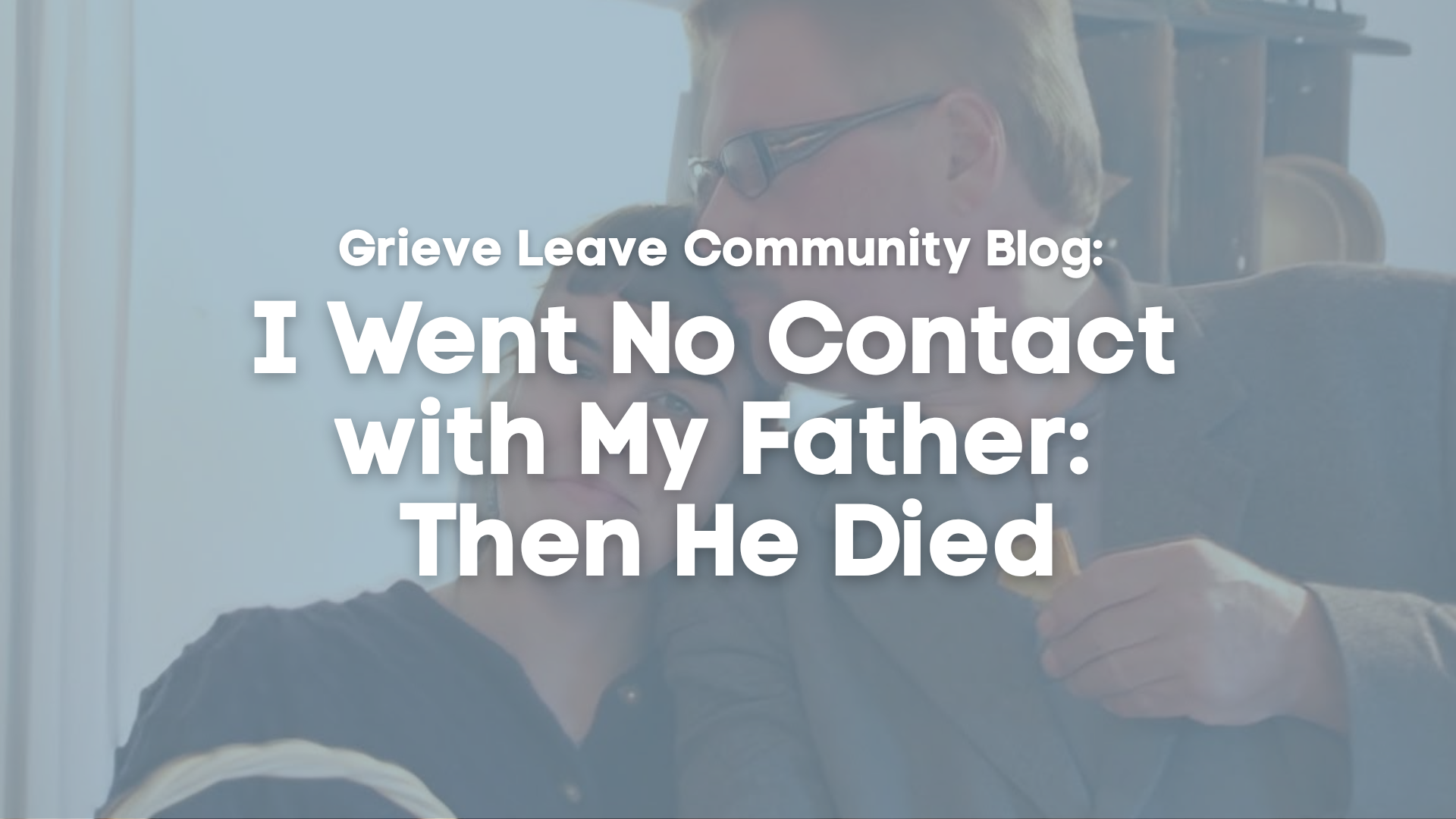
This is not a cautionary tale. I’ll be the first to support those who for their own well-being, are forced to excise toxic people from their lives. This is about the nature of grief—and what we lose when someone dies, even though we let them go long ago.
The seasons are changing, as they do every year. But this year the encroaching darkness feels different—a stark reminder of everything I’ve carried in this last turn around the sun. As I putter around my rowhouse, unpacking lunchboxes and guiding my children through their homework, a curtain of darkness slowly falls outside my windows.
And over me.
The last time I saw my father, the days were much longer. It was summertime, and he beckoned me over from the Adirondack chair in our backyard, specifically out of earshot of the rest of the family.
.jpg)
He whispered in my ear how fat I was getting.
That was five years ago—the day I decided I couldn’t let him into my home or my life anymore.
Some people are so toxic they make you feel awful for simply existing. My father was one of them. He could be magnetic: funny, brilliant, generous with his friends. But with me, he was cutting, unpredictable, and cruel. Even now, listening to his old voicemails burns me with shame.
It wasn’t just one way he hurt me. It was a full lifetime of pain.
Our relationship was a cycle of hurt and reconciliation, a tide that predictably kept washing ashore—until I grew tired of standing in the surf and trudged off the beach altogether.
Two years ago, during one of our longest periods of no contact, I was wrapping Christmas presents when my phone rang from an unknown number. It was the Baltimore County Police Department calling to inform me that my father had died in his apartment, alone in his bed.
And In that moment, our estrangement became permanent.
.jpg)
I had envisioned this day before, thinking it would bring relief—or even closure. But it brought the opposite. I was pulled down into a proverbial sea by an anchor so fierce it nearly drowned me.
When someone dies, you don’t just grieve the parts you loved. You grieve the person in their entirety. Who they were, and also who they might have been. What might have taken place if there had been more time.
In my grief over the last couple of years, I learned that both things could be true: my father was a generous and encouraging person to his friends. He was also a deeply damaging figure in my life.
They say in grief, it takes years for the brain to rewire itself. Right now, I am still tied to him. My neural pathways lead back to his voice, his rage, and his threads of tenderness. He made parts of my life both miserable and rich. I remember afternoons spent wandering the Walters Art Museum, music classes at the Peabody Institute, and countless trips to the movies seeing Martin Scorsese—probably when I was far too young to do so. He showed me a wider world beyond the city of Baltimore I was growing up in. We’d steal away for long weekends spent at Bluegrass festivals or visiting his friends in New York.
But then there were also the sniping comments, the insults, the explosions of rage, the blows. The words lasted longer than any bruises.
I can’t say I’m better off because of him, but I can’t deny that my life is more textured because of it. Some days I rise above the weight of the waves. Other days I collapse under them.
It is my unfortunate inheritance. It is his legacy.
I often feel undone, incomplete—like his life, like our relationship. Who might I have been with a different version of him? The father his friends adored versus the one I endured? Is there somehow an alternate ending on a different timeline where I picked up the phone the last time he called?
If you are estranged from someone you love, let me offer this: cutting them off will protect you, but death won’t resolve the hurt you’ve carried. It only seals it.
Grief doesn’t skip you. You know this. You’ve been grieving all this time.
Grief sharpens. It demands to be carried in both hands—the love that was once there, and the harm that can’t be undone. The challenge is not to separate them from the projected image of what might have been, but to hold the full weight of who they actually were.
For my father, in death, as in life, his cruelty and tenderness are fused.
It is the way you visit the beach at night and realize the darkest nights actually show the brightest stars.
.png)
Celeste Perilla is a social worker, community organizer and writer based in Baltimore, Maryland. She writes about institutional transparency, family, recovery and grief on her Substack, The Root Note.


.png)
.png)
.png)